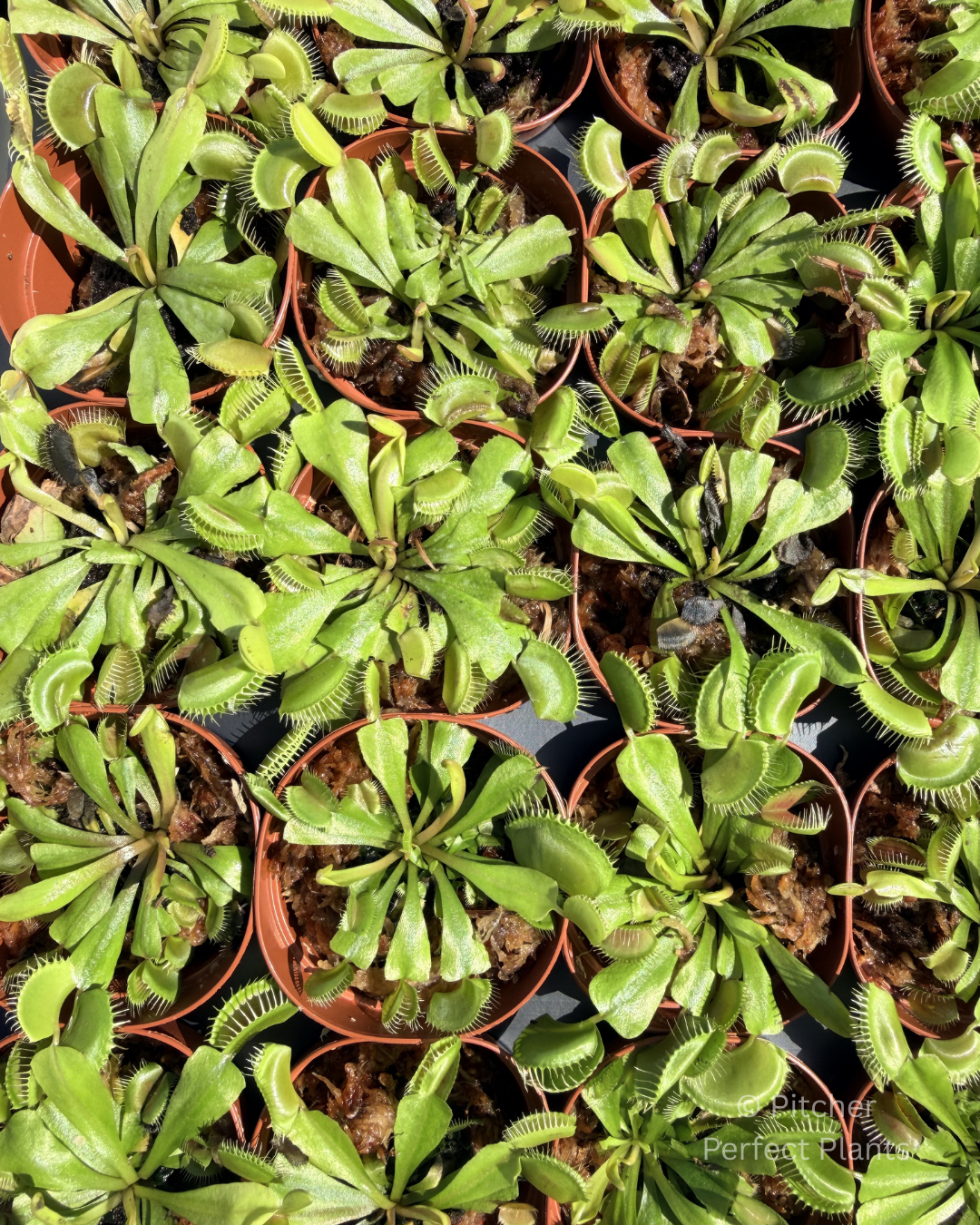
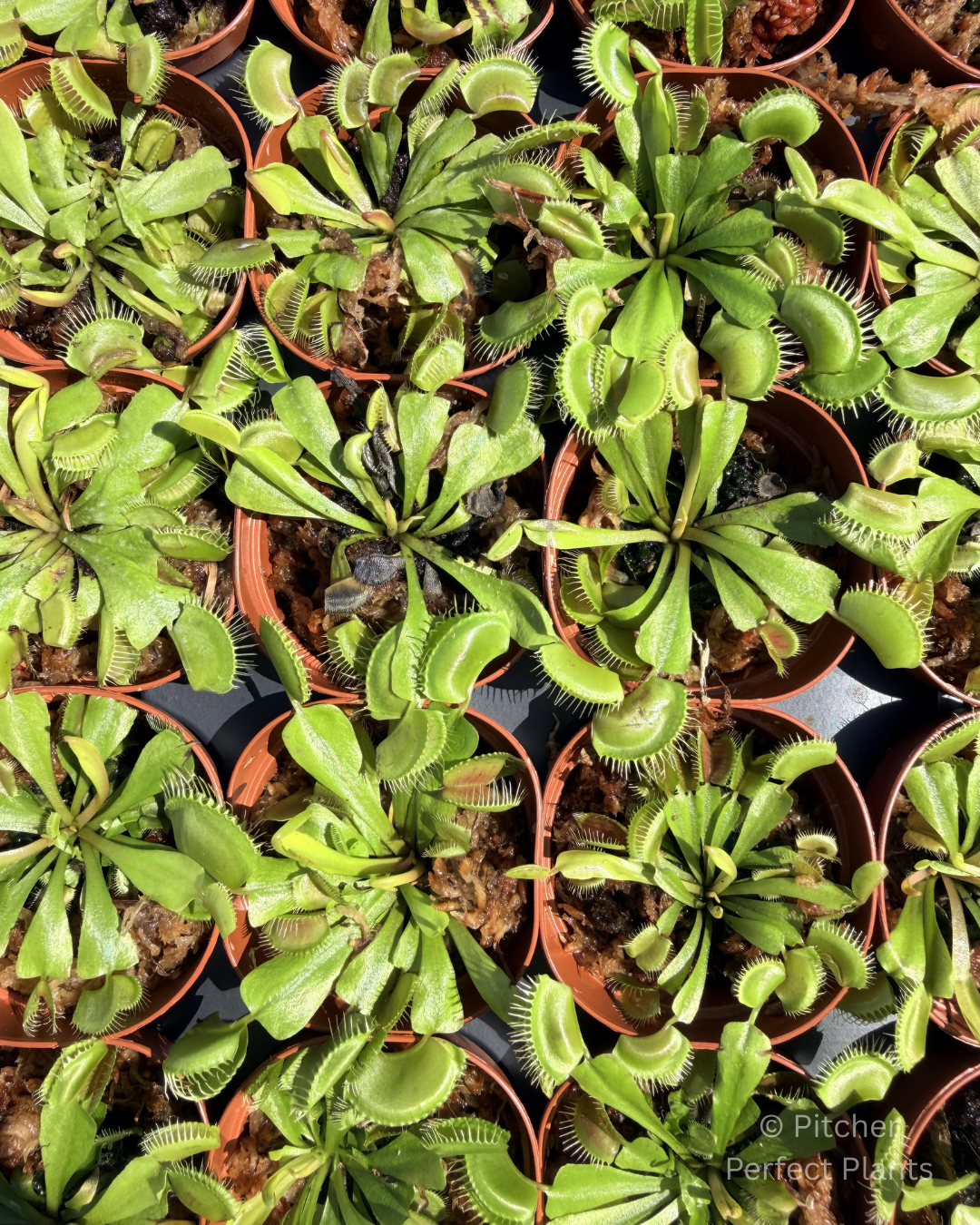
Venus flytrap (Dionaea muscipula)
Venus flytrap (Dionaea muscipula)
Couldn't load pickup availability
Share
The Venus flytrap (Dionaea muscipula) is one of the most famous carnivorous plants in the world. Native to the wetlands of North and South Carolina in the United States, it has specialized leaves that snap shut and trap bugs when tiny trigger hairs are touched. This adaptation allows it to survive in nutrient-poor soils by digesting prey and absorbing essential nutrients like nitrogen.
Growing Guide
Growing Guide
Light: Venus flytraps like at least 4-6 hours of direct sunlight per day. Outdoors is best, but a very bright windowsill or strong grow light can work for growing indoors.
Water: Use distilled water, rainwater, reverse osmosis water, or well water with low TDS (no higher than 100, below 50 is ideal). Tap water usually contains minerals that can harm the plant. Keep the soil consistently moist (not dry), often by sitting the pot in a shallow tray of water.
Soil: Use nutrient-poor, well-draining soil like a mix of sphagnum peat moss (no added fertilizer) and perlite. Regular potting soil can kill the plant.
Feeding: If grown outdoors, the plant will catch its own food. Indoors, you can occasionally feed it small insects (like mealworms). Once every few weeks is enough. Avoid feeding it human food.
Dormancy: Venus flytraps benefit from a winter dormancy period (about 3–4 months) with cooler temperatures (around 35–50°F / 2–10°C). During this time, growth slows and leaves may die back which is normal. Your flytrap may appear like it's dead or dying during this time.
Humidity & Temperature: Flytraps like moderate humidity and warm growing conditions (70–90°F / 21–32°C) during the active season.
Potting Tips: Use plastic or glazed pots rather than terracotta, which can leach minerals into the soil.